
Fascial Manipulation®Stecco Method - Podiatry.
Course Structure.
Our Podiatry oriented Fascial Manipulation® Stecco courses offer a distinctive and progressive learning pathway through the many aspects of fascia. They are stimulating, enjoyable, practical, can enrich your clinical reasoning and practice to the benefit of your patients.
Currently, we host 2 course levels, each divided into two main parts. For example, an Online theory (1a) and an onsite 2 day practical (1b). Attendance at the practical is required for the course to be completed.
Study Rooms. Online theory is formed of Study Rooms through which you progress, each room containing a series of lectures with MCQ’s per room. The questions being based on material from the room. One of the rooms is practical, containing excellent high quality videos on locating the fascia points and their treatment, including the health and safe practice for both the patient and practitioner. You are allowed more than one attempt at a rooms MCQ’s.
Textbook and App. A printed copy of the practical manual is provided, which also contains an access code to the downloadable app of the fascia treatment points. These point are pertinent to the level you are studying. This is included in the course fee.
Online Access. Upon payment (in full or deposit) you will be able register upon the learning site to access the online lectures for the relevant level. Access is valid for 12 months from the date of online registration and included in your course fee. Post successful completion of a whole level these materials are accessible for a further 3 months.
After this period, successful post level 1 course attendees will be able to purchase access to the lectures and videos from the Stecco Learning Platform, via a one year subscription.
Onsite Practical. The practical extends over 2 working from the pelvis to feet. Your course fee includes this two days tuition, refreshments and lunch. It does not include accommodation or travel.
Course Attire. The two day attendance is primarily practical. Session attire is usually sports shorts or sportswear leggings. Please note, jogging bottoms, denim or thick material shorts are not advised. Equally, trousers or skirts are not suitable for the practical sessions.
Scope of Practice: This course is adapted from the whole body approach, covers from the pelvis to feet and intended as an extended scope practice for Podiatrists.
Essentials.
- UK podiatrists must have either a BSc in Podiatry or diploma and 12 months post qualification experience/education. (There is discretion in this. That is, an attendee who works in a context where a podiatrist, experienced in FM, can monitor/mentor them. Please contact Info@infigoeducation.co.uk to discuss it).
- None RCPOD attendees are welcome but will not be covered by RCPOD insurance for the skills taught in the course. You need to ensure your professional body insurance will provide cover if attending and confirm this with the course host.
- Non-UK podiatrists must be registered with their professional body, have either a diploma or degree and 12 months post qualification experience/education. Additionally, you will not be covered by the RCOP insurance.
- Learning styles and ways are distinct to each of us. The learning hours mentioned on other pages of the site are simply there as a guide to the level of attention required for the course theory. Some might need less and others more. On the practical, there is strong expectation you will have given time to becoming familiar with, and practicing of, the practical positioning of patients, yourself and technique.
Copyright: Please note, all online theory and video materials are covered by International Copyright and are not to be passed on nor copied. Similarly, the supplied textbook is Copyright internationally.
Dates and Costs for 2027
Venue: Heathrow, hotel to be confirmed.
LEVEL 1: 13-14 March (practical)
LEVEL 2: 19-20 June (practical)
COST per level: £1600
To book please contact Ian on
Please note, training levels are progressive as Level 1, 2.
Masterclass can only be undertaken once you have passed level 2.
It is hoped to provide a further course, specific to working with superficial fascia but this is to be determined.
In booking you:
1. Confirm you are a qualified, registered podiatrist.
2. Agree to the payment Terms and Conditions and Privacy Terms listed on this site.
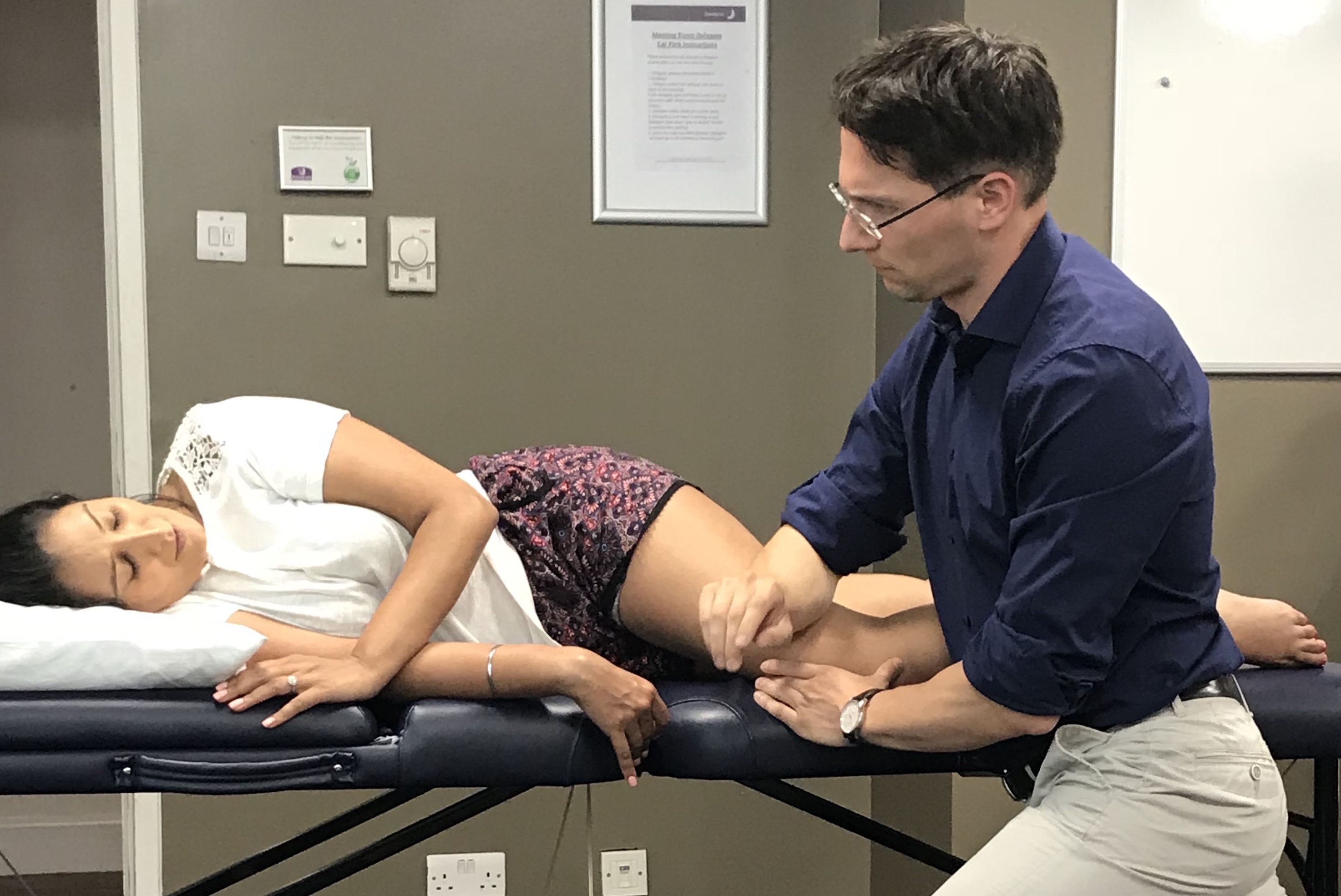
Level 1a Online theory: Muscular Fascia.
There are 3 study rooms to progressively work through, containing approximately 12 hours of excellent theory and practical lectures. It is advised to work through each of the lectures in room 1 and 2 at least twice…..
Level 1b
This is the Onsite practical of 16 hours over 2 days. It brings the theory and practical together. Whilst predominantly practical it will contain lectures but no MCQ.
Level 2a: Retinacula, joints, adaptive compensations.
There are 3 study rooms to progressively work through which, combined, contain approximately 11 hours of excellent theory and practical lectures. It is advised to work each of the lectures in study rooms 1 and 3 at least twice.
Level 2b
This is the Onsite practical of 16 hours, over 2 days. It brings together all the theory with the practical. Whilst predominantly practical it will contain lectures but no MCQ.
Fascial Manipulation Stecco Course Testimonials
A fantastic course….already helped our patients…thank you Ian for introducing myself and the team to FM.
Mr Ben H.