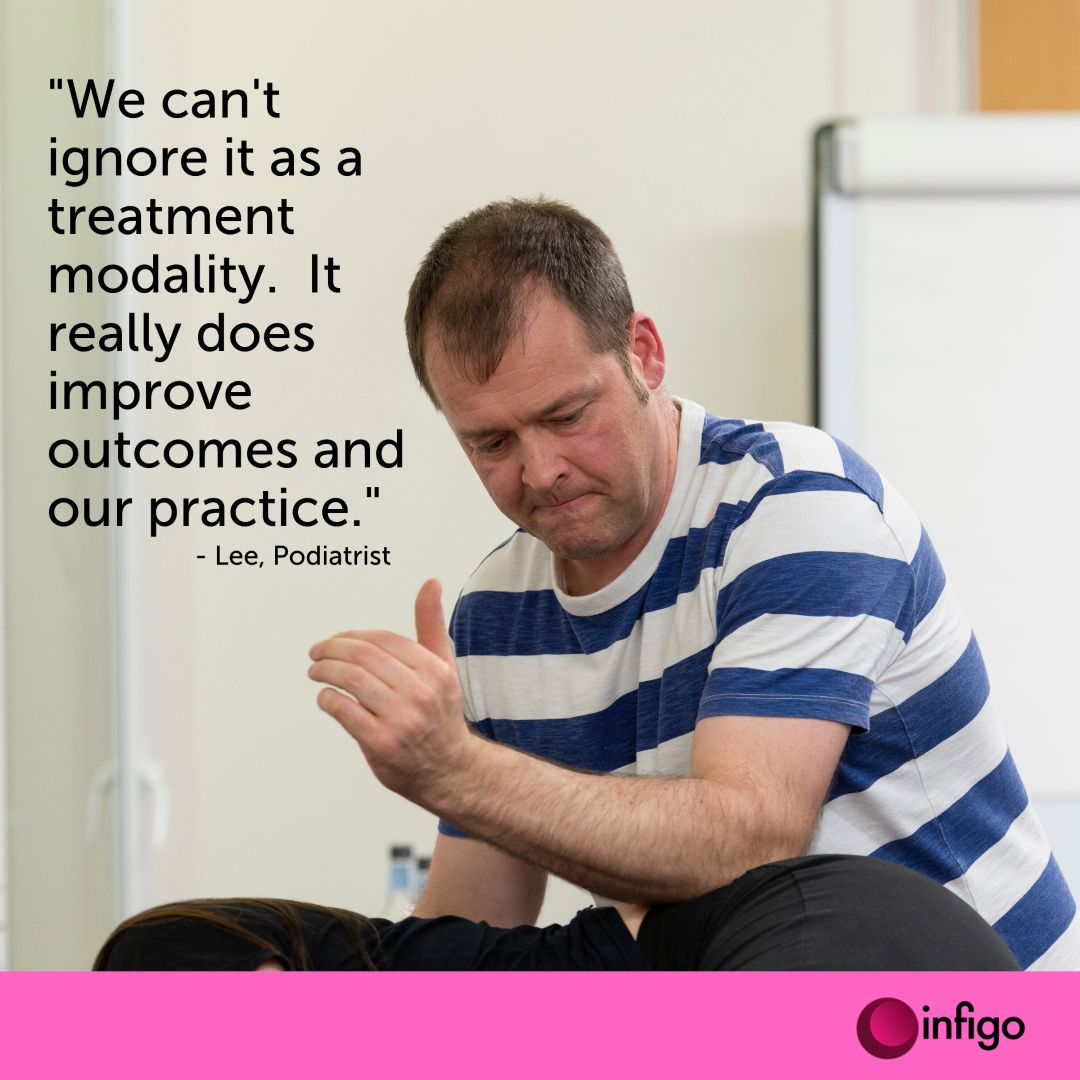
Fascial Manipulation®Stecco Method - Podiatry.
Course Structure.
The unfolding understanding around the intimate relationship between fascia and its associated muscle has brought us to a point where it is reasonable to consider “MSK” intervention may appropriately be understood as a Myofascial Skeletal activity.
Indeed, one of the most recently written text books on biomechanics*, amongst many of its topics, deftly weaves and demonstrates this interrelationship of muscle and fascia in our understanding of human function and clinical reasoning. (*Clinical Biomechanics in Human Locomotion. A. Horwood and N. Chockalingham)
These Fascial Manipulation® courses offer a progressive learning pathway through levels of training including Masterclass opportunities and reflect the thinking of that interrelationship of muscle and fascia.
Each course is divided into an online theory for lectures and an attended 2 day practical. Attendance at the practical being required for the course to be completed.
Online theory is formed of 2 blocks: a Basic Science (anatomy theory) and a Clinical Science (its practical application with supportive videos).
Both blocks have their MCQ exams, based upon knowledge obtained from the online lectures.
Copyright: Please note, all online theory and video materials are covered by International Copyright and are not to be passed on nor copied. Similarly, the supplied textbook is Copyright.
Scope of Practice: Fascial Manipulation® Stecco Method, for Podiatrists, is adapted from the whole body approach and is intended for use only within our scope of podiatry practice, pelvis to feet.
Level 1 Online: Muscular Fascia.
1a Basic Science includes:
There are 4.5 hours of excellent highly detailed lectures. Much of the material is new to our thinking and so a minimum of 20 hours study is advised. Below are the main topics covered.
Fascial anatomy superficial fasciae; Muscular fasciae gross anatomy; Deep fasciae microscopic anatomy; Epimysial fasciae; Deep fascial innervation.
Principles of Fascial manipulation; Physiology of the fascial system; A biomechanical model of myofascial sequences and units employed in assessment and treatment of fascia; Assessment and treatment of fascia in its sagittal, frontal and transverse planes; Comparative identification and assessment of centres of coordination in fascia and their treatment strategies. Place of the fascial assessment chart.
1b) Clinical Science includes:
This consists of 3.5 hours of clear, practical instructional video material. A minimum of 16 hours practical study is advised to attain a comfortable competence and ease in advising patients how to lay on the couch and adopting your own working posture. From the pelvis to toes there are some 30 FM points we address (each side of the body) and you will be expected, after 16 hours practice, to demonstrate an ease with this. The videos aid identification of specific muscular fascia regions from the pelvis to feet which we will work upon. Please note, acquiring these skills at this stage do not equip you to practice diagnosis and treatment of people. Below are the main topics covered.
Identification of, and palpation techniques upon, specific fascial manipulation regions (known as Centres of Coordination and associated motor units). You will learn these for each plane of movement (sagittal, frontal and horizontal), in each segment of the lower body, pelvis to toes. Safe working placement of patients and practitioners (see image opposite). Movement verification tests in relation to a segment and its planes of motion. Please note: Repeated practice of this is required in order to become efficient by the time of the practical course so the more time given, the better. MCQ exam.
Level 2: Retinacula, joints, adaptive compensations.
2a Basic Science includes:
How to treat patients with multi-segmental issues efficiently as well as those with complex movement patterns or adaptive compensations; locate and identify Centres of Fusion and Diagonal points within the fascia to achieve this; treatment demonstration and practice will aid comparative assessment between centres of coordination and centres of fusion; Clinical reasoning and treatment strategies will be emphasised.
2b Clinical Science includes:
The video below introduces some of the underlying premises of Fascial Manipulation® and provides insight to the level of thinking you will be working at on the course. We advise you make the time to watch and enjoy. (Please note, this is from a previous webinar and so it will not be possible for the speaker to respond to questions you may have.)
LEVEL 2 Online: Retinacula and joints.
Basic Science includes:
How to treat patients with multi-segmental issues efficiently as well as those with complex movement patterns or adaptive compensations; locate and identify Centres of Fusion and Diagonal points within the fascia to achieve this; treatment demonstration and practice will aid comparative assessment between centres of coordination and centres of fusion; Clinical reasoning and treatment strategies will be emphasised.
Clinical Science includes:
Do I need to have studied fascia before?
- No. Prior knowledge of working with fascia is not required to attend the course. However, the supplied and advised pre-reading material is regarded as essential for you to gain most out of the course. This material is selected to help you gain insight into the content taught, so these concepts will not be entirely new to you.
- Course levels 1 and 2 are richly rewarding and the attended 2 day practicals are enjoyable, intense and fun. Each online theory part are delivered by Professors Carla And Antonio Stecco.
- They introduce us to elements of anatomy, physiology, neurology, pathology and additional diagnostic options we have likely not considered before. Each level has an MCQ at the end, which prefers a 60% pass rate (ie 18 out of 30 questions). The MCQ is based upon information in the pre-reading and course theory material. To that extent it will require a commitment to undertake reading the pre-course material provided or recommended.
- Overall assessment on the course combines continual assessment of practical work, some group work and MCQ. Attendance is mandatory and signing in for the course will occur.
- Food, drinks and lunch are provided.
Where it is deemed a persons theoretical knowledge and /or practical skills do not meet the desired goal, arrangements can be made to resit an MCQ (allowing revision period). Practical skills assessment may have to await re-attendance at a further course. These latter matters can be discussed.
-
Post Course Support Group. In order to support you in the development of your new FM skills we have teamed up with the Royal College of Podiatry and created the MSK UK: Fascial Manipulation Special Advisory Group (MSKFM:SAG). You will be invited to join on successful completion of your Level 1 course. Hopefully you can draw upon the experience and insights of group members you look to introduce the clinical reasoning and practical components of FM into daily clinical work.
Suitability
This course is suitable for:
- Attendees must be podiatrists. (It is at the discretion of the course organiser if others, such as physiotherapists, might be allowed to attend).
- HCPC registration is required for UK based podiatrists.
- UK podiatrists must have either a BSc in Podiatry or diploma and 12 months* post qualification experience/education. (*There is discretion in this. That is, an attendee who works in a context where a podiatrist, experienced in FM, can monitor/mentor them. Please contact Info@infigoeducation.co.uk to discuss it).
- None RCOP attendees will not be covered by RCOP insurance for the skills taught in the course. You need to ensure either your own, or professional body, insurance will provide cover if attending.
- Non-UK podiatrists must be registered with their professional body have either a diploma or degree and 12 months post qualification experience/education. Additionally, you will not be covered by the RCOP insurance.
What is included?
(i) Courses 1, 2 and 4 are a Hybrid of online lectures and attendance at a 2 day practical, likely at Heathrow. Each online level is divided into Basic Science and Clinical Science, with their individual MCQ test. The MCQ will be based upon the knowledge obtained from the online lectures.
The great thing about these online lectures is that you can do them in bite sizes, just allow yourself plenty of time to take the small bites.
Additionally, the online learning modules provide 12 months access to high quality videos of how to locate the fascial manipulation points, the safe placement of both you and the patient and how to work upon the points.
(ii) An app code of the fascial manipulation points (relevant to each level) is provided to download to your phone or ipad. The code is contained within the printed book you receive on each level of the course.
(iii) Lunch and refreshments are further provided.
(iv) If you are a RCPOD member, you will be automatically covered by their professional insurance. If you are not a RCPod member you will need to ensure your professinal body covers insurance.
All this is included within the course fee. After 12 months, additional access to a further 12 months of the videos of the FM points can be obtained for a small fee, via the Stecco Institute.
The advised online learning hours, per module, is……. WE therefore strongly advise you give plenty of time to the online learning.
Level 2 attendees will gain a great deal from the same book (page 115 onwards), setting yourselves up nicely for the course.
(vi) Level 1, 2, and 4 content:
- LEVEL 1, Muscular Fascia: Basic Principles of Fascial manipulation; Physiology of the fascial system; A biomechanical model of myofascial sequences and units employed in assessment and treatment of fascia; Assessment and treatment of fascia in its sagittal, frontal and transverse planes; Comparative identification and assessment of centres of coordination in fascia and their treatment strategies. Successful, post level 1 course attendees, will be able to access, via one year subscription, videos of movement tests treatment points from the Stecco Learning Platform.
- LEVEL 2, Retinacula and Joints: How to treat patients with multi-segmental issues efficiently as well as those with complex movement patterns or adaptive compensations; locate and identify Centres of Fusion and Diagonal points within the fascia to achieve this; treatment demonstration and practice will aid comparative assessment between centres of coordination and centres of fusion; Clinical reasoning and treatment strategies will be emphasised.
- LEVEL 4: Superficial Fascia. This course moves us into working with superficial fascia tissues and involves the external component and, in our instance, focuses only upon the low limb.
- CERTIFICATION: This is a single day and takes place at the Stecco Fascial Manipulation® Institute, In Padova. It is the final
- On all levels, the practical sessions attire for the lower limb is usually sports shorts or sportswear leggings. Please note, jogging bottoms, denim or thick material shorts are not advised. Equally, trousers or skirts are not suitable for the practical sessions.
Already taken this course? Check out the resources we have available for you.
Dates and Costs for 2027
Venue: To be confirmed.
LEVEL 4: 27-28 Feb (practical to be confirmed)
LEVEL 1: 13-14 March (practical)
LEVEL 2: 19-20 June (practical)
MASTERCLASS: 4 June (practical)
Cost: £1600
To book please contact Ian on
Please note, training levels are progressive as Level 1, 2.
Masterclass can only be undertaken once you have passed level 2.
In booking you:
1. Confirm you are a qualified, registered podiatrist.
2. Agree to the payment Terms and Conditions and Privacy Terms listed on this site.
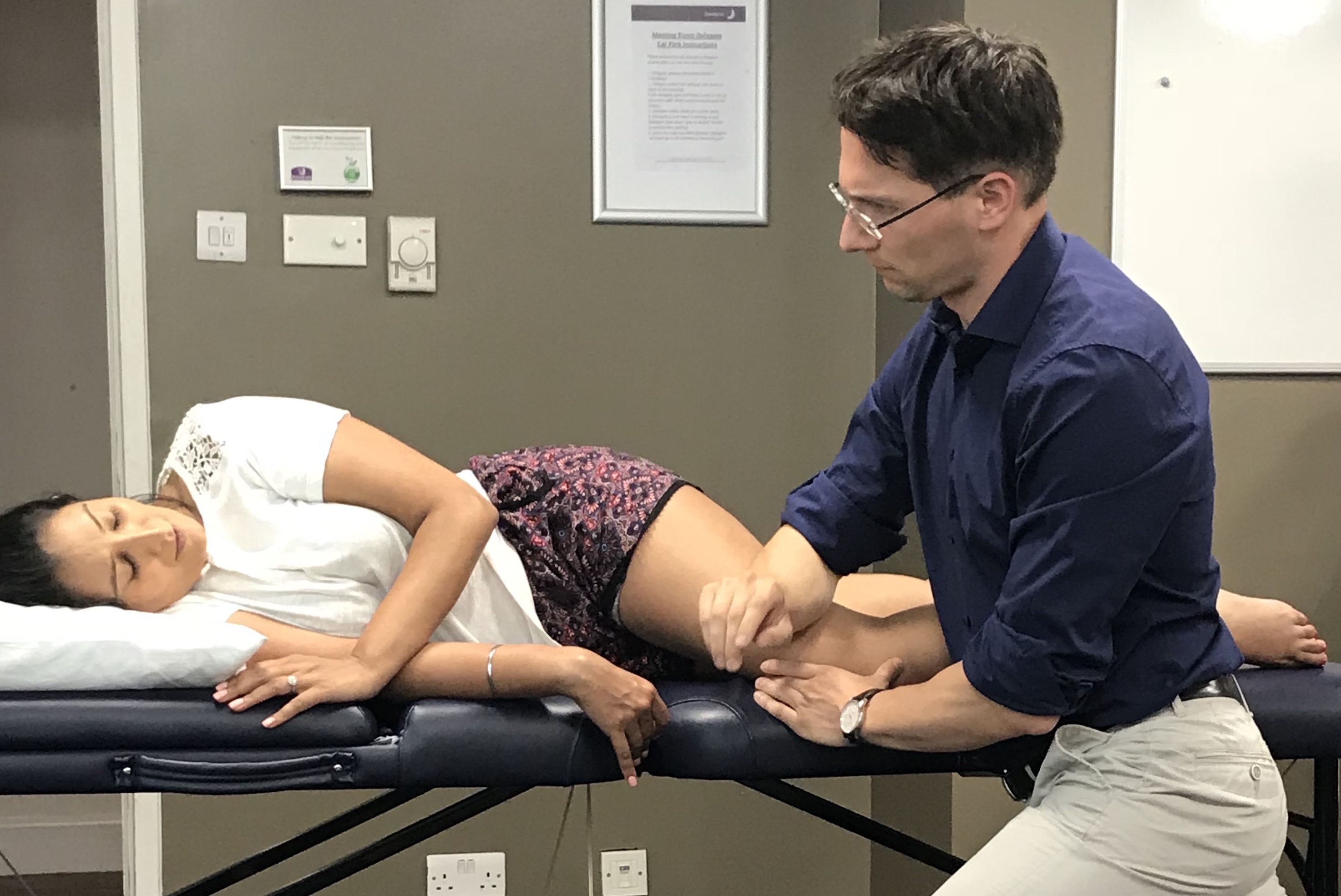
Fascial Manipulation Stecco Course Testimonials
A fantastic course….already helped our patients…thank you Ian for introducing myself and the team to FM.
Mr Ben H.
It was a privilege to attend the level 1 course….a lot to learn in the 4 days….took Antonio Stecco’s advice and started with it on the Monday…..since then been amazed at how this technique augments treatment approaches
Mr Iain J.
I find the joint mobilisation and fascial manipulation techniques to be an overall part of my assessment……From a surgical perspective the techniques have resulted in many patients not having to undergo surgical procedures as well as managing post-operative complications resulting from abnormal gait patterns.
Dr. Mark P.